Quick Summary / Key Takeaways
- Invest in the structural foundation of your home first, including proper insulation and site drainage. These features protect your home long term and are much harder to change later than finishes or fixtures.
- Plan your floor layout around how you move through your home each day. A thoughtful layout supports your routine and helps your home feel practical from the start.
- Choose energy-efficient windows and build with a properly sealed structure to improve comfort and reduce unnecessary strain on your HVAC system.
- Include dedicated storage areas such as a functional mudroom and a well-planned pantry to keep your home organized year-round.
- Think ahead during construction. Planning for extra outlets, exterior access, and flexible spaces is easier now than after your home is complete.
Introduction

Building a custom home is one of the largest investments you will make, so the decisions you make early matter. It is easy to focus on finishes like countertops and paint colors, but the long-term performance of your home depends on the structure, layout, and planning behind the walls. When the foundation, drainage, insulation, and layout are done right, your home stays comfortable, efficient, and practical for years to come.
As you plan your build, think about how you move through your day. Does the walk from the garage to the pantry make sense? Is there a place for muddy boots or sports gear? Will your laundry room location make weekly chores easier? These are the details that shape a home that truly works for your routine. A thoughtful floor plan and strong structural choices matter more than trends that can change in a few years.
In this guide, we cover the must-haves when building a custom home that protect your investment and support everyday living across Central Arkansas. If you are starting to plan your build, we would be glad to talk through your ideas and help you think through the details. At Silver Field Construction, we focus on building homes that are planned carefully and built to last.
Structural Systems vs. Finish Selections: What to Prioritize
| Feature | Category | Long-Term Impact | Ease of Change Later |
|---|---|---|---|
| High-Efficiency HVAC | Structural | Affects comfort and energy use year-round | Difficult and costly |
| Enhanced Insulation | Structural | Improves temperature stability and efficiency | Very difficult |
| Kitchen Backsplash | Cosmetic | Primarily aesthetic | Easy |
| Decorative Lighting | Cosmetic | Impacts style more than structure | Moderate |
Smart Storage Features to Plan During Construction
| Area | Built-In Feature | Everyday Benefit | Best Time to Plan |
|---|---|---|---|
| Kitchen | Walk-in Pantry | Keeps counters clear and organized | Framing |
| Entryway | Custom Mudroom | Reduces daily clutter | Framing |
| Garage | Overhead Storage | Frees up usable floor space | Early Build Stage |
| Primary Suite | Built-in Shelving | Adds organized storage | Framing |
Pre-Construction Planning Checklist: Must-Haves to Confirm Before Building
- Finalize your floor plan and confirm any in-house CAD adjustments before permits are submitted.
- Review your lot conditions, including grading and drainage plans, to ensure water will flow away from your foundation.
- Confirm outlet locations, exterior power access, and hose bib placement so they are built in from the start.
- Plan insulation levels, window selections, and HVAC sizing to support long-term comfort and efficiency.
- Set a realistic contingency budget for site preparation or unforeseen conditions.
Construction Phase Checklist: Confirm Key Structural Details Early
- Walk through the framing to confirm room sizes, pantry layout, mudroom space, and overall flow feel right.
- Review insulation installation before drywall to ensure coverage is complete and properly placed.
- Confirm plumbing locations, especially in laundry rooms and exterior hose connections.
- Review HVAC placement and duct layout for proper airflow and efficiency.
- Schedule required city inspections to ensure everything meets local building codes.
Table of Contents
Section 1: SMART LAYOUT CHOICES THAT IMPROVE EVERYDAY LIVING
Section 2: STRUCTURAL AND EFFICIENCY FEATURES THAT PROTECT YOUR INVESTMENT
Frequently Asked Questions
Section 1: SMART LAYOUT CHOICES THAT IMPROVE EVERYDAY LIVING
FAQ 1: Why is a functional mudroom a top priority?
A functional mudroom is a top priority when building a custom home because it protects your main living areas from dirt, moisture, and everyday clutter. In Central Arkansas, especially around Little Rock and surrounding communities, rain and red clay soil are part of daily life. A well-planned mudroom creates a clear transition space between the outdoors and the rest of your home. Built-in cubbies, wall hooks for coats and backpacks, a bench for removing shoes, and durable flooring that handles moisture well help keep mess contained before it spreads.
When we review your layout and make in-house CAD modifications, this is one of the areas we pay close attention to. We often recommend placing the mudroom near the garage entry and sizing it based on how your family actually uses the space. Small adjustments to storage, traffic flow, or cabinetry can make this area far more functional over time. It may not be the most noticeable feature during planning, but it is one of the practical must-haves homeowners appreciate every day.

Section 2: Planning & Layout
FAQ 2: How does an open floor plan impact daily living?
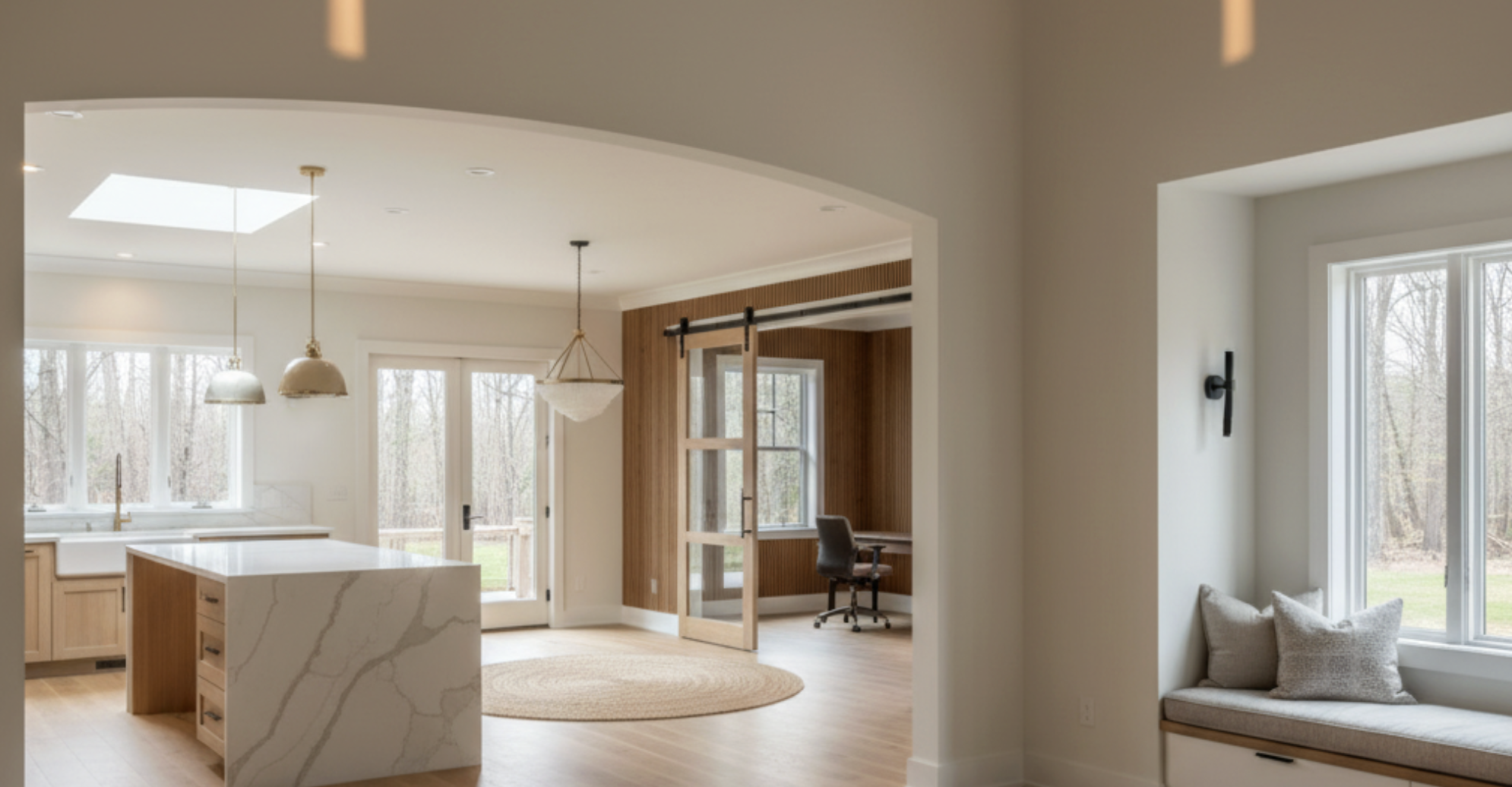
An open floor plan improves daily living by connecting your kitchen, dining, and living areas into one shared space. Instead of separating rooms with walls, you get better visibility, easier movement, and more natural light throughout your home. That makes everyday tasks simpler. You can prepare meals while staying part of the conversation. You can host family and friends without feeling boxed into separate rooms.
When we sit down with you during the initial consultation and review your layout, we talk through how you actually use your home. Some families want wide-open gathering space. Others prefer partial separation for noise control. We make minor adjustments through our in-house CAD services so the layout supports your routine, not just a trend. An open floor plan works best when it is planned with intention and built around how you live in Central Arkansas.
Section 1: SMART LAYOUT CHOICES THAT IMPROVE EVERYDAY LIVING
FAQ 3: What should I consider for kitchen pantry design?
When building your custom home, your pantry should be planned around how you use your kitchen every day. A walk-in pantry gives you dedicated storage for groceries, small appliances, and bulk items so your countertops stay clear. Adjustable shelving helps you stay organized as your storage needs change. Good lighting and solid door placement also matter. You want the space to be easy to access and simple to maintain.
Location is just as important as size. Your pantry should sit near your refrigerator and main prep area so your kitchen flows naturally. During the design phase, minor floor plan adjustments can make sure the pantry supports your layout without wasting square footage. When done right, a pantry is not just extra storage. It is part of building your home to function better day to day.
FAQ 4: Why is laundry room placement so important?
Laundry room placement is important because it affects your daily routine more than you might expect. If your laundry room is close to the bedrooms, you avoid carrying heavy baskets across the house or up and down stairs. That small detail saves time and effort every week. You may also consider placing it near the mudroom or garage entry if your family deals with sports gear, work clothes, or muddy towels.
When building your custom home, this is one of those layout decisions that should be made early in the planning process. We talk through how you move through your home so the placement makes sense for your routine. A well-located laundry room is not about luxury. It is about building your home to function better day to day.
Section 2: STRUCTURAL AND EFFICIENCY FEATURES THAT PROTECT YOUR INVESTMENT
FAQ 5: Is upgraded insulation worth the extra cost?
Yes, upgraded insulation is often worth the extra cost because it directly affects your comfort and monthly energy bills. In Arkansas, where summers are hot and humidity is high, better insulation helps keep cool air inside and reduces strain on your HVAC system. That can lead to lower utility costs over time. It also helps stabilize indoor temperatures so certain rooms in your home do not feel noticeably warmer or cooler than others.
When building your custom home, insulation is part of creating a solid, well-built structure from the start. We focus on building a tight, properly sealed home so your investment performs the way it should long term. While higher-quality insulation may increase upfront costs, it supports energy efficiency and everyday comfort for years to come.
FAQ 6: What role does site drainage play in longevity?
Site drainage protects your home’s foundation by directing water away from the structure and preventing long-term damage. In Central Arkansas, heavy rainfall and clay-based soils can cause water to collect around your home if the lot is not graded properly. Over time, that can lead to foundation movement, standing water, and landscaping problems. Proper grading should move water away from the home, and a well-installed gutter and downspout system helps manage roof runoff.
Before construction begins, we make sure your lot is evaluated and graded correctly so water flows away from the foundation. Depending on the property, additional drainage solutions may be needed to manage runoff. This step may not be visible once your home is complete, but it is one of the most important must-haves when building a custom home. Protecting your foundation from day one helps your home stay stable and durable for decades.
FAQ 7: How do energy-efficient windows affect home comfort?
Energy-efficient windows improve comfort by reducing heat transfer and helping your home maintain a steady indoor temperature. In Arkansas, where summers are hot and direct sunlight can be strong, windows with low-E coatings help limit heat gain and reduce UV exposure inside your home. That protects flooring, cabinets, and furniture from fading while also easing the workload on your HVAC system.
When building your custom home, window selection is part of creating a solid, energy-conscious structure. Quality windows can help lower energy use over time and improve overall comfort in every season. They also reduce outside noise, which makes a difference in busier neighborhoods across Central Arkansas. Choosing high-performance windows is one of those practical must-haves when building a custom home because it supports long-term efficiency and day-to-day livability.
FAQ 8: Why should I plan for exterior outlets and faucets?
You should plan for exterior outlets and faucets early because they are much easier to install during construction than after your home is finished. In Arkansas, outdoor living is part of daily life. Whether you are maintaining your yard, adding landscape lighting, or decorating during the holidays, having properly placed power and water access saves time and prevents extension cords running across your yard. Outlets near the roofline make seasonal lighting safer and cleaner, and evenly spaced outlets around the perimeter help with tools and equipment.
Water access matters just as much. A hose bib on more than one side of your home makes yard work simpler. Some homeowners also choose a hot water connection for washing pets or cleaning muddy gear. During the planning phase of your custom home, we talk through how you plan to use your exterior space so these details are built in from the start. These small additions may not seem major, but they make your home more practical for years to come.