Introduction
Building a custom home starts long before excavation, concrete, or framing begins. Before construction can move forward, you’ll need to understand how your lot, permits, utilities, and site conditions may affect the project.
For homeowners planning to build in Bentonville or elsewhere in Benton County, questions about building permits, perc tests, utility access, easements, setbacks, and inspections often come up early in the process. These requirements can feel overwhelming, especially if you’ve never built a home before.
The good news is that most of these steps follow a predictable process when they’re addressed early. An experienced local builder can help identify potential issues before they become delays, whether that’s a utility concern, a septic requirement, or a site-preparation challenge.
This guide walks through the key permit and lot-readiness considerations homeowners should understand before building a custom home in Benton County, helping you make informed decisions before construction begins.
The Bentonville and Benton County Permit Process
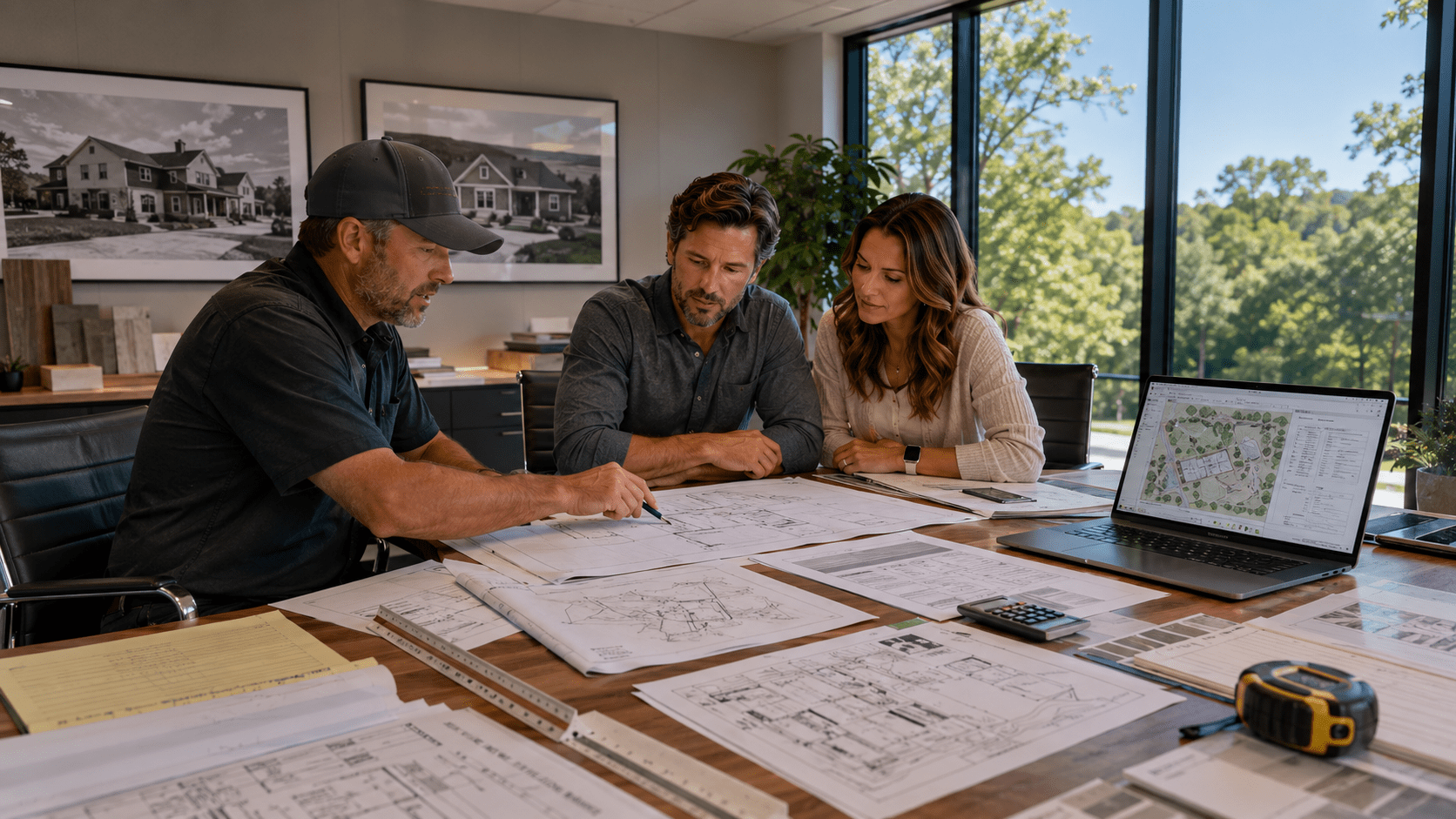
Before construction begins, you’ll typically need permits and approvals that allow your project to move forward. The exact requirements depend on where the property is located and how the lot will be developed. A homesite within Bentonville city limits may follow different review requirements than a property located in unincorporated Benton County, which is why it’s important to understand local jurisdiction early in the planning process.
While every custom home project is different, the permit process generally follows a similar sequence:
- Evaluate the lot and confirm buildability. This includes reviewing utility access, drainage conditions, easements, setbacks, septic requirements if applicable, and other site-specific factors that could affect construction.
- Prepare construction and site plans. Home plans, lot layouts, and supporting documents are typically finalized before permit applications are submitted.
- Submit plans for review. Depending on the property’s location, plans may be reviewed by the appropriate local jurisdiction before approvals are issued.
- Receive permits and approvals. Once required reviews are completed, construction can move forward.
- Schedule inspections throughout construction. Various inspections are typically required during the building process to verify that work is completed according to applicable requirements.
Permit requirements can vary based on the property’s location, utility availability, site conditions, septic considerations, and the overall scope of the home being built. Because local procedures and requirements can change, homeowners should verify current information before starting construction.
Before permits can move forward, it’s important to make sure the lot itself is ready for development. That starts with understanding the property’s physical characteristics and any conditions that could affect your build.
Inspections Along the Way: What Homeowners Should Expect
Once permits are in place and construction begins, inspections are typically conducted at key stages of the building process. These inspections help verify that work is completed according to approved plans and applicable requirements before the next phase of construction moves forward.
While inspection requirements can vary based on the property’s location and the scope of the project, homeowners can generally expect inspections to occur throughout major construction milestones. Common inspection stages may include:
- Foundation and sitework inspections before major structural work begins.
- Framing inspections after the home’s structural components are in place.
- Mechanical, electrical, and plumbing inspections as building systems are installed.
- Final inspections before the home is ready for occupancy.
The exact inspection sequence depends on the jurisdiction, the home’s design, and site-specific conditions. Properties with septic systems, utility extensions, or unique site requirements may involve additional reviews during the construction process.
For homeowners, the most important thing to understand is that inspections are a normal part of building a custom home. Working with a builder who coordinates inspections and communicates progress along the way can help keep the project moving smoothly from one phase to the next.
Perc Tests and Septic Systems: When They’re Needed on Northwest Arkansas Lots
Not every homesite in Benton County has access to a municipal sewer system. If you’re purchasing a rural property or building outside areas served by public sewer infrastructure, a septic system may be required. Before a septic system can be approved, the property may need a perc test to evaluate whether the soil can properly absorb and filter wastewater.
A perc test, or percolation test, measures how quickly water moves through the soil. The results help determine whether the property is suitable for a septic system and what type of system may be appropriate. Soil conditions can vary significantly across Northwest Arkansas, which means septic suitability should never be assumed based on neighboring properties or previous land use.
Understanding septic requirements before purchasing land can help you avoid costly surprises later in the planning process. A lot that appears build-ready may still require additional evaluation before a septic system can be approved, particularly on rural properties where public sewer service is unavailable.
Because perc testing is an important part of evaluating many Northwest Arkansas homesites, it’s worth understanding how the process works before committing to a property. Our guide on perc tests for Arkansas land provides a closer look at what the test measures, when it’s typically required, and how the results can affect your building plans.
Easements and Setbacks: What They Mean for Your Buildable Area
Before purchasing land in Benton County, it’s important to understand that not every part of a lot can necessarily be built on. Easements and setbacks can affect where a home, garage, driveway, shop, or other improvements can be placed.
Common restrictions include:
- Utility easements for water, sewer, electric, gas, or communication lines.
- Drainage easements that help manage stormwater across a property.
- Access easements that allow utility providers or neighboring property owners to access a designated area.
- Building setbacks, which establish minimum distances between structures and property lines, roads, or other designated features.
Together, these restrictions determine the property’s buildable area. A lot may appear large enough for a specific floor plan or outdoor living space, but easements and setbacks can reduce the portion of the property available for construction.
Before finalizing a homesite or house plan, review the property’s survey and plat information carefully. Identifying easements and setback limitations early can help ensure the lot supports your building goals and reduce the risk of redesigns, delays, or unexpected site-preparation costs later in the process.
Utility Hookups for Benton County Homesites
Utility availability is one of the most important factors to verify before purchasing land in Benton County. Access to water, sewer, electric service, and high-speed internet can affect both construction costs and overall site readiness.
In established Bentonville neighborhoods and other developed areas, municipal water and sewer connections may already be available nearby. Rural properties often require additional planning and should be evaluated carefully before construction begins.
Depending on the location, homeowners may need to consider:
- Private wells if municipal water service is unavailable.
- Septic systems where public sewer connections are not accessible.
- Electric service extensions if the homesite is located far from existing utility infrastructure.
- Internet availability, which can vary significantly between rural and developed areas.
Utility access can also influence where a home is positioned on the lot and what site preparation may be required. Before purchasing land, verify available services rather than assuming they are already in place. Understanding utility requirements early can help you avoid unexpected development costs and determine whether a property is truly ready for your custom home plans. If you’re still comparing locations, our guide on where to build your custom home around Bentonville explores several Northwest Arkansas communities and the types of homesites they offer.
How a Local Builder Manages the Process?
Permits, inspections, utility planning, septic evaluations, surveys, easements, setbacks, and site preparation all work together during the early stages of a custom home project. Managing these requirements can be challenging, especially for homeowners building for the first time.
At Silver Field Construction, we help homeowners navigate these details before construction begins. That often includes reviewing surveys and plat information, identifying potential easement or setback limitations, evaluating utility access, addressing septic requirements when necessary, and coordinating permit-related requirements throughout the planning process.
Local familiarity can help prevent issues that commonly affect project timelines. Something as simple as an overlooked utility easement, site-access challenge, utility connection issue, or incomplete permit documentation can create avoidable delays during construction.
By addressing potential concerns early and coordinating the process from the start, a local builder can help keep the project organized, support a smoother permitting process, and reduce the likelihood of unexpected setbacks once construction is underway.
Frequently Asked Questions
Do I Need a Permit to Build a House in Bentonville?
Yes. New home construction generally requires permits and approvals before construction begins. The requirements may vary depending on whether the property is located within Bentonville city limits or in unincorporated Benton County. Even Benton county requires a permit. Permit requirements should be confirmed early in the planning process, particularly if the lot has unique site conditions, utility considerations, or septic-system requirements.
How Long Does Permitting Take in Benton County?
There is no single timeline that applies to every project. Review times can vary based on the property’s location, the complexity of the home, and current review activity. Because requirements and workloads can change, homeowners should verify current timelines before construction begins. Preparing complete plans and addressing site-related issues early can help prevent unnecessary delays.
What Is a Perc Test and Do I Need One?
A perc test, or percolation test, evaluates how water drains through the soil. The results help determine whether a property can support a septic system. If a lot does not have access to a public sewer connection, a perc test may be required before development can move forward. This is a common consideration for rural properties in Benton County and throughout Northwest Arkansas.
Who Pulls the Permits—Me or the Builder?
In many custom home projects, the builder coordinates permit applications, inspections, and related approvals on the homeowner’s behalf. At Silver Field Construction, we help guide homeowners through these requirements as part of the planning process. Responsibilities can vary by project, so it’s important to discuss permitting expectations before construction begins.
Ready to Take the Next Step?
Permits, utility access, septic requirements, easements, setbacks, inspections, and site preparation all influence whether a property is truly ready for construction. Understanding these factors before you build can help reduce delays, avoid unexpected costs, and make the planning process more straightforward.
If you’re evaluating a lot in Bentonville or elsewhere in Benton County, it’s worth addressing these considerations before finalizing your plans. Let a local builder handle the permitting for you.