
Septic System Cost in Arkansas for a New Home
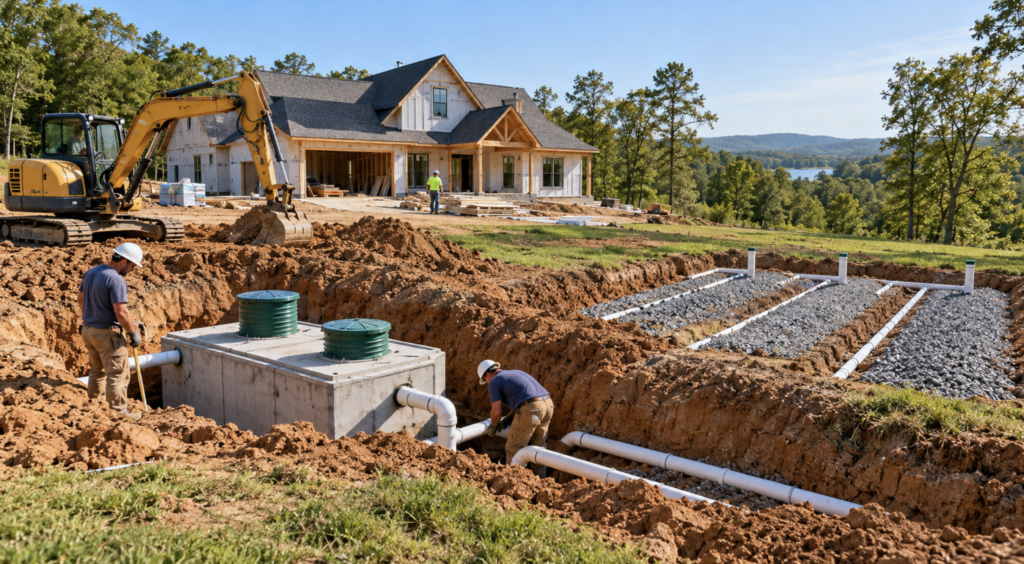
A conventional septic system in Arkansas costs about $6,800 for a three-bedroom home, according to ProMatcher. Silver Field Construction owner Greg Grissom estimates a septic tank costs around $10,000 when city sewer is unavailable. Your lot’s soil conditions determine which septic system it can support. Arkansas Department of Health (ADH) construction permit fees range from $30 to $150, depending on home size. If public sewer serves your lot, you can generally connect to it instead of installing a septic system. When you’re buying land outside town for a custom home, it’s easy to focus on the house and overlook the cost of wastewater service. If city sewer service isn’t available for your lot, you may need a septic system. That expense can add a significant line item to your construction budget. The septic system cost depends on the system your property can support, soil conditions, and the work required for installation. Your home’s size and bedroom count also affect the system design. As your builder, we want you to understand these costs before you commit to a lot, not after construction has started. Knowing what your property needs helps us account for septic requirements as we plan your new home. How Much Does a Septic System Cost in Arkansas? For a conventional septic system serving a three-bedroom home, ProMatcher reports an Arkansas fixed-fee estimate of $6,828.67, or about $6,800. The reported range is $6,241.62 to $7,415.71. Separately, Silver Field Construction owner Greg Grissom estimates that a septic tank costs around $10,000 when city sewage isn’t available. These figures provide different cost references, not competing estimates for the same installation. For comparison, national cost guides report the following ranges by system type: System type National cost range Source Conventional $6,000–$15,000 SepticCalculator Aerobic $12,000–$25,000 SepticCalculator Mound $15,000–$30,000 SepticCalculator These are national estimates, not Arkansas prices. NerdWallet reports a national whole-system range of $3,601 to $12,474, with an average of just over $8,000. Its national estimate for aerobic systems is $10,000 to $20,000. The ranges vary by source and system type, so they should not be treated as quotes for your property. When researching “septic system cost Arkansas,” start with the local figures, then have the property evaluated. Soil conditions and the system approved for your lot affect what installation requires. Grissom’s estimate is discussed in our Greg Grissom interview. A complete installation involves more than the tank. Design, permitting, the drain field, and installation also need to be considered when planning your construction budget. What Goes Into the Cost to Install a Septic System If your lot needs a septic system, there are several things to consider before installation begins. Your property needs a soil evaluation, a system design, and approval from the Arkansas Department of Health (ADH). You also need an approved septic tank and a licensed installer. Soil Evaluation and System Design Before choosing a septic system, you need to know what your property can support. An ADH-licensed Designated Representative evaluates the soil and prepares the system design. ADH uses soil pits to check for rock, impervious layers, and wet-season groundwater. These findings help determine which system is suitable for your property. You may come across the term “perc test” when researching septic systems. However, ADH’s current guidance specifies soil pits rather than percolation tests. For more information about preparing land for a septic system, read our guide to perc test for land in Arkansas. The Health Department Permit Your county health unit handles the septic application process. Contact the office and ask for the Onsite Environmental Specialist. The ADH construction permit fee depends on your home’s square footage: Home size Construction permit fee 1,500 sq. ft. or less $30 Over 1,500 to 2,000 sq. ft. $45 Over 2,000 to 3,000 sq. ft. $90 Over 3,000 to 4,000 sq. ft. $120 Over 4,000 sq. ft. $150 Repairs, alterations, and extensions have a $30 fee. NTO Tank’s summary of Arkansas requirements identifies two permits: a construction permit and an operation permit issued after inspection. The Tank Arkansas requirements allow concrete, fiberglass, and polyethylene septic tanks. The tank is only one part of your septic system. Its price alone does not tell you the total cost of installation. The Drain Field and Installation Your drain field must follow the approved septic system design. An ADH-licensed installer handles the installation and follows the approved plan. The system design and installation requirements depend on the conditions identified during your property’s evaluation. Why Arkansas Soil Changes the Price The soil and groundwater conditions on your lot help determine which septic system your property can support. Clay, rock, and high groundwater can rule out a conventional septic system. If your property has these conditions, you may need an alternative system. The Arkansas Department of Health (ADH) reviews alternative systems case by case. Approved options can include mound, aerobic, and evapotranspiration systems. ADH considers these alternatives only when a conventional system will not work. The system type also affects the potential installation cost. SepticCalculator reports the following national cost ranges: System type National cost range Conventional $6,000–$15,000 Mound $15,000–$30,000 Aerobic $12,000–$25,000 These are national estimates, not Arkansas installation prices. They show how the required system can change your project budget. A mound or aerobic system may fall into a higher national cost range than a conventional system. ADH uses soil pits to check for rock, impervious layers, and wet-season groundwater. An ADH-licensed Designated Representative evaluates your property and prepares the system design. If you’re considering a rural lot in Central Arkansas, find out what type of septic system it can support before you buy. That information helps you understand the property’s wastewater requirements before planning your home. Septic vs Sewer: Which Does Your Lot Need? When you buy land for a custom home, one of the first things to check is whether the property has access to public sewer service. If a sewer line serves your lot, your home can generally connect to the municipal system. If sewer service isn’t available, you may need a septic