Quick Summary / Key Takeaways
- Review framing and rough-ins before drywall so corrections can be made while everything is still accessible.
- Verify outlet, switch, and lighting locations match your approved floor plan.
- Check framing for straight studs, proper support, and required fire blocking before insulation begins.
- Confirm plumbing lines, electrical wiring, and ductwork are protected with metal nail plates where they pass through framing.
- Take photos to create an “X-ray” record of your home’s wiring, plumbing, and structure before the walls close.
Introduction

If you are building a home in Central Arkansas, seeing the framing go up is an exciting milestone. It finally looks like a house. But this stage is also one of the most important times to slow down and look closely. Before insulation and drywall are installed, your home’s framing, wiring, plumbing, and ductwork are fully visible. Once the walls close, those systems are no longer easy to access.
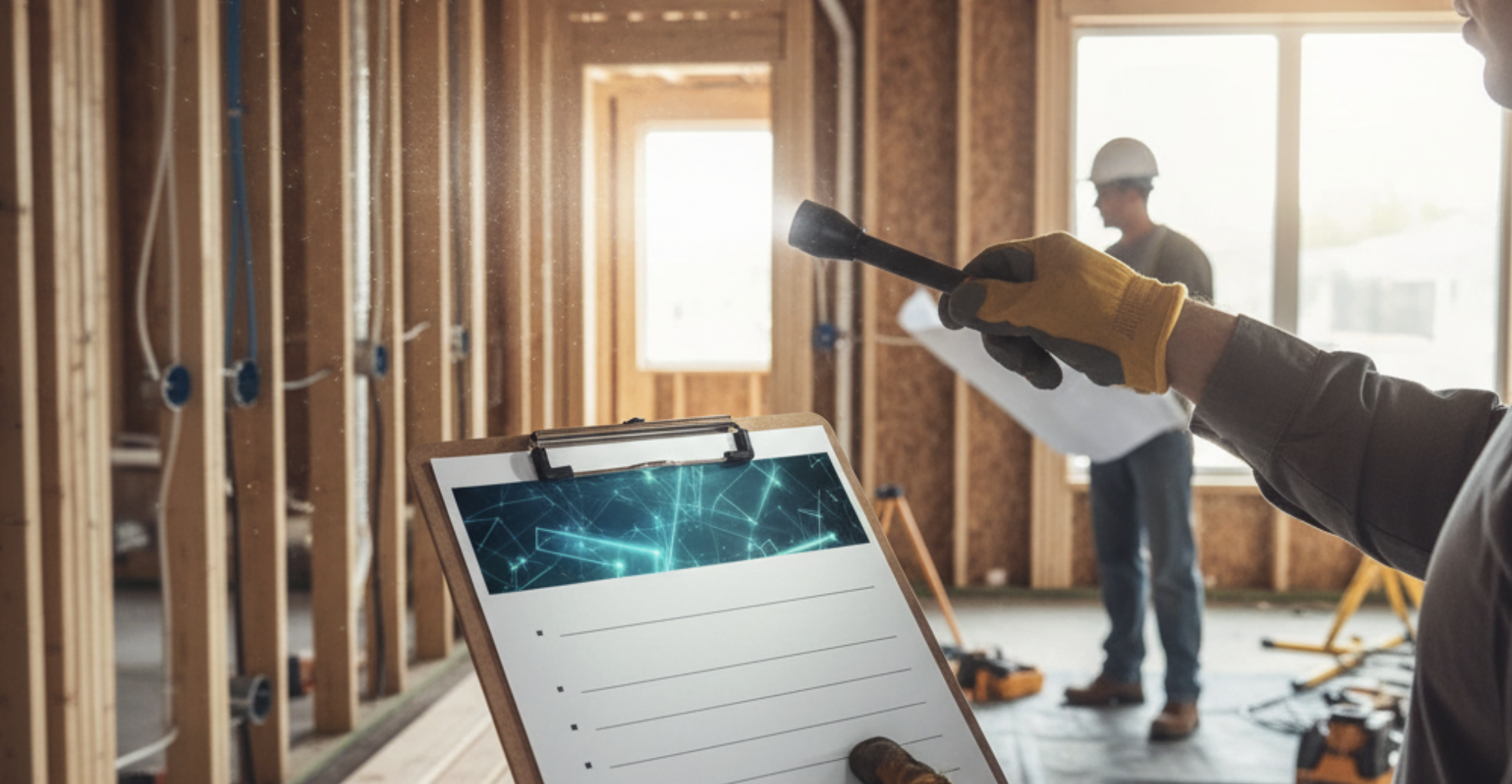
A pre-drywall inspection checklist helps you review the structure and rough-ins before they are covered. Think of it as the “X-ray” phase of your build. This is your opportunity to confirm outlet and switch locations, verify plumbing slopes and duct runs, and check framing details like fire blocking and wall alignment. Corrections are far simpler now than after drywall, tile, and cabinetry are installed.
This guide walks you through what to check before the drywall crew arrives, so your home matches the plans and performs the way it should. At Silver Field Construction, we take this stage seriously because it sets the foundation for everything that follows. We’ll guide you from your first design ideas to the day you get your keys. Your home, built right, on time, and within budget. That is how we build across Central Arkansas communities.
Core Systems to Verify Before Drywall Goes Up
| Inspection Area | Primary Focus | What You Should Confirm | Why It Matters for Your Home |
|---|---|---|---|
| Framing | Structural layout | Stud alignment, room dimensions, proper fire blocking | Straight walls and long-term stability |
| Electrical | Power distribution | Outlet and switch placement, protected wiring, braced fan boxes | Safety and daily usability |
| Plumbing | Water supply and drainage | Proper drain slope, secure fittings, installed nail plates | Leak prevention and noise reduction |
| HVAC | Airflow and efficiency | Sealed duct connections and correct routing | Consistent comfort and efficiency |
Common Pre-Drywall Findings and How They Are Corrected
| Identified Issue | Potential Impact | Typical Correction | Priority Level |
|---|---|---|---|
| Missing Nail Plate | Pipe or wire puncture risk | Install metal nail plate | Critical |
| Bowed or Twisted Stud | Uneven drywall finish | Replace or sister the stud | Medium |
| Loose Duct Connection | Air leakage | Seal with approved mastic | High |
| Outlet Not in Planned Location | Inconvenient furniture layout | Relocate electrical box prior to drywall | Low |
Before the Pre-Drywall Walkthrough: What to Prepare
- If you plan to hire a certified home inspector, schedule them several days before the city’s four-way inspection so any findings can be addressed without affecting the build schedule.
- Print or bring your approved electrical and plumbing plans so you can compare outlet locations, switches, and fixture placements to what is installed.
- Bring a fully charged phone and consider a backup battery so you can document each room clearly.
- Confirm that framing and rough-ins for electrical, plumbing, and HVAC are complete before your visit, so all systems are visible.
During the Pre-Drywall Inspection: What to Check Before Walls Close
- Look at wall studs for bowing, twisting, or alignment issues that could affect drywall finish.
- Verify required fire blocking is installed in wall cavities and between levels where applicable.
- Confirm plumbing lines are properly sloped and secured, and that protective nail plates are in place where pipes or wiring pass through framing.
- Check that windows and exterior doors are properly installed and flashed to help manage water intrusion.
- Photograph each wall bay to create an “X-ray” record of wiring, plumbing, ductwork, and framing locations.
Table of Contents
Section 1: PRE-DRYWALL INSPECTION BASICS EVERY HOMEOWNER SHOULD UNDERSTAND
Section 2: FRAMING AND STRUCTURAL ITEMS TO VERIFY BEFORE WALLS CLOSE
Section 3: ELECTRICAL, PLUMBING, AND HVAC ROUGH-INS TO REVIEW
Frequently Asked Questions
Section 1: PRE-DRYWALL INSPECTION BASICS EVERY HOMEOWNER SHOULD UNDERSTAND
FAQ 1: What is a pre-drywall inspection?
A pre-drywall inspection is a scheduled walkthrough of your home after framing, electrical, plumbing, and HVAC rough-ins are complete but before insulation and drywall are installed. At this stage, you can clearly see the structure, wiring paths, plumbing lines, ductwork, and framing details that will soon be covered. It is the right time to confirm that room layouts, window placements, outlet locations, and mechanical systems match the approved plans and meet local building codes.
During this phase, we walk the home with you so you can see how everything comes together behind the walls. If adjustments are needed, they are far easier and less expensive to address now than after drywall is installed. This step gives you confidence that your home is built the way it was planned, from the inside out.

FAQ 2: When should I schedule the inspection?
You should schedule your pre-drywall walk-through after framing is complete and the rough-ins for plumbing, electrical, and HVAC are installed, but before insulation and drywall begin. In Central Arkansas, this typically lines up with the city’s required “four-way” inspection, which reviews framing, electrical, plumbing, and mechanical systems before the walls are closed.
We coordinate this stage carefully and let you know when your home is ready. If you plan to bring in a third-party inspector, schedule them one to two days before the city’s four-way inspection. That timing allows small corrections to be handled without delaying insulation or drywall installation and helps keep your build on schedule.
FAQ 3: Who performs the pre-drywall walkthrough?
The pre-drywall walkthrough is typically done with your builder, and many homeowners also choose to bring an independent inspector. During this stage, you walk the home together to review framing, outlet placement, plumbing lines, HVAC ductwork, and room dimensions before insulation and drywall are installed. This is your opportunity to confirm that everything matches the approved plans.
An independent inspector can provide a technical review focused on code compliance and structural details, while your builder walks through layout, selections, and placement decisions with you. We encourage homeowners to be present at this stage so you can see how your home is built behind the walls. It keeps the process transparent and gives you confidence before construction moves forward.
Section 2: FRAMING AND STRUCTURAL ITEMS TO VERIFY BEFORE WALLS CLOSE
FAQ 4: What framing issues should I look for?
During a pre-drywall inspection, you should look for bowed or warped studs, uneven wall lines, and any framing that appears out of square. Check that door and window openings are properly sized and that structural headers are fully supported. It is also important to confirm that room dimensions match the approved plans and that backing is installed where cabinets, towel bars, or handrails will be mounted. These details affect how your walls, trim, and finishes look once drywall is installed.
When we walk the framing with you, we review layout, wall alignment, and support locations before insulation begins. It is much easier to correct a stud or add backing at this stage than after the walls are closed. Taking the time to verify framing now helps ensure your home looks clean and straight in the finishing phase.
FAQ 5: Why is fire blocking important?
Fire blocking is required by residential building code to slow the movement of fire and smoke inside concealed wall cavities. In wood-framed homes, open stud bays can act like vertical air channels between floors. Fire blocking closes off those pathways by placing solid material such as dimensional lumber or approved fire-rated products at key points, including between floors, at ceiling transitions, and around soffits and chases.
During the pre-drywall inspection, this is the stage where you can physically see that fire blocking is installed where it should be. Once insulation and drywall are in place, those areas are no longer visible. City inspectors review fire blocking as part of the framing or four-way inspection, but walking the home and understanding what you are looking at gives you added confidence before the walls close.
FAQ 6: Should I take photos during the walk?
Yes, you should take photos of each wall before insulation and drywall are installed. Think of it as creating an “X-ray” of your home. This gives you a clear record of where plumbing lines, electrical wiring, HVAC ducts, and framing members are located. Later, when you want to mount a television, install shelving, or run new wiring, those photos help you avoid cutting into a pipe or wire.
During the pre-drywall walkthrough, we encourage homeowners to document each room carefully. Take wide shots of every wall and closer images of areas with plumbing, electrical panels, or structural headers. Including a tape measure in the photo can help you reference distances from corners or floors. It is a simple step that can save time and prevent costly mistakes years down the road.
Section 3: ELECTRICAL, PLUMBING, AND HVAC ROUGH-INS TO REVIEW
FAQ 7: How do I check electrical rough-ins?
Start by walking through each room with your approved electrical plan and verify the location of every outlet, switch, and light box. Make sure outlets are positioned where you will actually use them, including pantry walls, kitchen islands, garage work areas, and exterior spaces. Confirm that dedicated circuits are installed for high-demand appliances such as microwaves, refrigerators, HVAC equipment, and bathroom receptacles as required by code.
Look closely at wiring that runs through studs to ensure protective nail plates are installed where wires pass near the edge of framing members. Check that ceiling fan boxes are rated and properly braced to support fan weight and vibration, not just a light fixture. This is the right time to adjust outlet placement or add a circuit if something does not match how you plan to use your home. If you have questions about layout or load requirements, we walk through those details with you before the walls are closed.
FAQ 8: What should I look for in plumbing?
Check all supply lines, drain pipes, and vent stacks for visible leaks, loose fittings, or joints that are not fully seated. Make sure pipes are properly secured to the framing to reduce movement and prevent future “water hammer” or rattling inside the walls. Drain lines should be sloped correctly so wastewater flows out as intended. In most residential construction, horizontal drain lines are typically pitched about 1/4 inch per foot to maintain proper flow. Also look for protective nail plates anywhere pipes pass through studs or top plates to prevent punctures from drywall screws or trim nails.
Before insulation and drywall are installed, this is the right time to confirm that laundry connections, hose bibs, and bathroom supply lines are positioned exactly where you expect them. Once tile and finishes are in place, adjustments become far more complicated. If anything looks out of place, we address it now while everything is still accessible and easy to correct.